Posts

Showing posts with the label Read

The Face of Afghanistan (12) - Crippled by Disease

Image
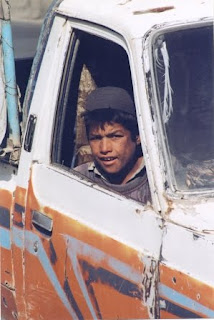
Disease in Afghanistan is rife and destroys lives and livelihoods. It strikes down more than just individual lives. Chronic diseases are widely recognized as a substantial hindrance to economic growth. Afghanistan has the highest rates of tuberculosis in the region and is one of the most highly tuberculosis-burdened countries in the world with over 2% of the population being infected or risking infection every year. Malaria is another prevalent public health threat, on the rise in more than 60 percent of the country, with over 13 million people at risk. The annual incidence is estimated to be two to three million cases. A large number of other health insecurities are related to water, stemming from poor hygiene and inadequate access to safe supply. Over 60 per cent of Afghans use unsafe drinking water. Disease impacts disproportionately weaker individuals like children. Medical supplies and facilities are scarce in major centers and almost non-existent in rural areas and ...
The Face of Afghanistan (11) - The Land of Mines

Image
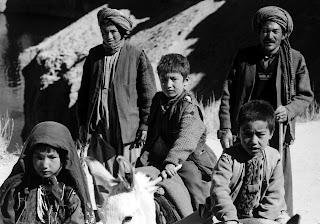
For ten Afghans, of which many are children, tomorrow will be the last day they can walk on their legs. It will happen with no warning sign, while they are walking in the fields, perhaps on their way to work or to school. One third of them will die in those circum-stances. Over seven thousand Afghans were killed or wounded by landmines between 1998 and 2003. Afghanistan is one of the most heavily mined countries in the world. About 10 million landmines were still in place as of the be-ginning of 2005. In addition, millions of other explosive devices, such as rockets and grenades, litter the country. In 2003 about 60% of the rural population around Kabul lived in proximity of unexploded bombs. Estimates put the number of disabled people at around 4% of the population – approximately 1 million people. No wonder that Kabul is full of legless beggars dragging their stumps on the dusty pavements. [continue reading The Face of Afghanistan ] [see the video ] [see the photo ga...

The Face of Afghanistan (10) - Fleeing Home

Image
Millions of Afghans had to flee from their home and leave behind their possessions, their families, and their friends. Today, Afghans are the second largest group of refugees and internally displaced persons in the world - after Palestinians. Over a quarter of the country’s population has sought refuge outside of the country prompting the United Nations to declare Afghanistan the major site of human displacement in the world. During the war with the URSS the number of Afghan refugees abroad escalated dramatically with as many as 2.5 to 3 million in Pakistan and another 1.5 million in Iran alone. About 150,000 were able to migrate permanently to other places including the United States, Australia, and various European countries. In addition, there were over one million internally displaced persons in Afghanistan in the same period. The majority have now returned to their place of origin, but the southern and western parts of the country still hosted in 2005 approximately 200,00...

The Face of Afghanistan (9) - Born to Die Young

Image
Afghans can expect to live less than 45 years which is at least 20 years lower than all of neighboring countries and 6 years lower than the averages of the Least Developed Countries. It is also what the western world expected to live a century ago. Infant and maternal mortality rates are among the highest in the world. Twenty percent of the children die before the age of five, and one woman dies from pregnancy-related causes every 30 minutes. The main causes of death among children are diarrhea, respiratory tract in-fections, and measles. In the midst of this mayhem, Afghans are ironically lucky in only one thing: their ignorance prevents them from realizing that over 80 percent of these deaths are preventable. Knowing they are dying unnecessarily would perhaps be an even heavier burden to bear. [continue reading The Face of Afghanistan ] [see the video ] [see the photo gallery ]

The Face of Afghanistan (8): A Life of Fear

Image
Imagine a day of fear. Now imagine a life of it. Very few places in the world can compare to Afghanistan when it comes to insecurity and threats to people’s lives: pervasive and abject poverty and destitution, extremely poor health and nutrition, massive population displacements, a degraded environment, and widespread distrust in dysfunctional state institutions. This is the background on which human rights are the victim of the repression perpetrated by armed groups, ethnic discrimination, political intimidation, and abuses related to land, movement, and participation rights. This is Afghanistan today. Right now while you are reading this page, the people of these images are trying to survive. [continue reading The Face of Afghanistan ] [see the video ] [see the photo gallery ]

The Face of Afghanistan (7): Broken Promises and Wrong Choices

Image
Had we invested in supporting the development of Afghan’s civil society, we might have prevented terrorism to be harbored here and reduced the odds of events such as September 11. And, of course, we would have spared Afghanistan decades of hell. Afghanistan is still waiting for us to deliver on our promises. In a famous UN session decades ago, the rich world pledged to spend 0.7% of their national income for direct development aid. We pledged to spend money for the target country and in that country. Business investments and loans were supposed not to count as they are simply money that will give investors a yield over time. Only a handful of donors have achieved that. Despite what the public opinion may have been led to believe, experts estimate that the US has been contributing only 0.15% – a gap of, in 2005 dollars, over 50 billion dollars per year. The US accounts for half of the missing development budget - Germany, the UK, Italy, France together for 20%, and Japan for ano...

The Face of Afghanistan (6) - Helping Them, Helping Us

Image
Afghanistan needs help to move on, more help than was promised, and surely much more than has been given. Afghanistan became a hotbed of insecu-rity not only for Afghans but also for the rest of the world; today Afghanistan is the largest producer of poppies used for narcotics and used to be a haven for terrorists. Afghans, especially children, have been exposed to atrocious living conditions for years. They are going to wear the scars of brutality outside and inside. Like an Afghan poet said, they may become trees grown out of bitter seeds. Even those who are not moved by the utter injustice Afghanistan lives in should help out of enlightened self-interest. Irrespective of what some claim, devel-opment experts affirm that sufficient quantities of aid can still reach the communities and individuals it is aimed to despite the mayhem of power strug-gles and insecurity. In 2002 the rich countries promised the country's gov-ernment 4.5 billion dollars over five years to fund rebu...

The Face of Afghanistan (5) - A Failed State

Image
Afghanistan is what economists and political scientists call a “failed state,” a nation that spiraled into poverty and violence and a society that collapsed and regressed into a dark medieval nightmare. Here poverty contributes to civil strife and ultimately protracted war. Among over 110 countries surveyed that followed a trajectory of economic freefall after 1953, Afghanistan’s fate is one of the most cruel and - due to Al-Qaeda - the one with arguably the largest influence on world politics. Afghanistan fell into, and still is in, a “poverty trap,” an economic state from which it is nearly impossible to exit without external help. It is superficial and wrong to say it is just Afghanistan’s fault. Famous economists like Jeffrey Sachs indicate why Afghanistan has always been a country prone to poverty: landlocked away from international trade with very high internal cost of transportation; ravaged by disease; poor in good soil to grow crops on; scarce readily accessible natural r...

The Face of Afghanistan (4) - First Day in Afghanistan

Image
The first sight of Kabul is the road from the airport. Armored anti-aircraft guns bask in the reddish light of the dusty highland on a background of bullet-sprayed walls. There you also see the first Afghans. Boys of all ages swarm the streets, like in any other Middle Eastern town. Here, however, their clothes are more ragged and their shoes made of rubber. They look lonelier, and they seem very busy. That is, they are looking for something to do, anything that can bring some money into their families. They sell plastic bags and look for used ones. They repair tires and push carts. They beg and clean the pavements. They pull their legless relatives and carry goods to the market. The girls are more conservatively dressed and less conspicuous. You can catch a glimpse of them while they tend to their younger brothers in the alleys bordered by rubble or when they accompany their mothers to the main bazaar, of course, before they disappear under the burka - a die-hard practice that...

The Face of Aftghanistan (3) - A History, and a Chronicle

Image
If Afghanistan was a person, its history would be a clinical case. At the beginning of the 20th century, protracted hostilities between the British Empire, Russia, and Afghanistan for the control of the Afghan territory lead to failed treaties, conventions, and open war. In 1921 the third Anglo-Afghan war ensues with both parties suffering heavy losses and results in England abandoning its plans of control. In 1929 king Kalakani is deposed and assassinated by Nadir Kahn, whose tribal forces loot the country. In 1933 Nadir is killed and Zahir Shah, age 19, takes the throne. He will rule until 1973 and will keep Afghanistan neutral during the Second World War. In 1973 Daoud Khan overthrows him, abolishes monarchy, and declares him-self president of the Republic of Afghanistan. In 1978 he is killed in a communist coup, where Taraki takes power, backed by the USSR. Taraki will be killed the following year. In June, 1978, the Mujahiddeen guerrilla was born, backed by the CIA i...

The Face of Afghanistan (2) - Foreword

Image
In 2003, just after the allied forces had routed the Taliban from Afghanistan, I joined a group of volunteers from Right To Play to establish a program in Kabul. Their mission was to restore a modicum of decency through sport and play for those children who had been deprived of almost everything. It was, with great foresight, an attempt to stop the re-growth of violence without using the conventional military or humanitarian aid means. Some of the "cliff notes" of that trip, as well as some of the photos, are here. Ultimately, this was an attempt to share the story of Afghanistan told by those who live it every day. More than a decade later, they still feel contemporary. ..."Their portraits are perhaps a good way to narrate what it means to be Afghan in the early twenty-first century, to be living in one of most atrociously poor and dangerous places on earth, in the richest world society on record. In Afghanistan, misery creeps out of every line in the old ma...

The Face of Afghanistan - Portraits and Life of a Wounded Land - 1

Image
This is the first chapter of a series of articles dedicated to Afghanistan, originally written in 2004, edited in 2007 and still poignantly current. This is the story of Afghanistan told by those who live it every day. Their portraits narrate what it means to be Afghan in the early twenty-first century, to be living in one of the most atrociously poor and dangerous places on earth, in the richest world society on record. Afghanistan, years after the Taliban were overturned, is still a country with a ravaged past and an uncertain future. It is not all Afghanistan’s fault. Beside many other factors that make it naturally prone to poverty, Afghanistan has long been sitting on one of the main fault lines between eastern and western blocks. US-backed Mujahiddeen guerrilla and the rule of the USSR finally set the stage for civil war and the Taliban. In many respects, Afghanistan's present is a living legacy of the Cold War, of our own past. Afghanistan is not only a humanitarian ...